Polished Concrete vs Epoxy: Cost, Lifespan, and UV Performance Compared
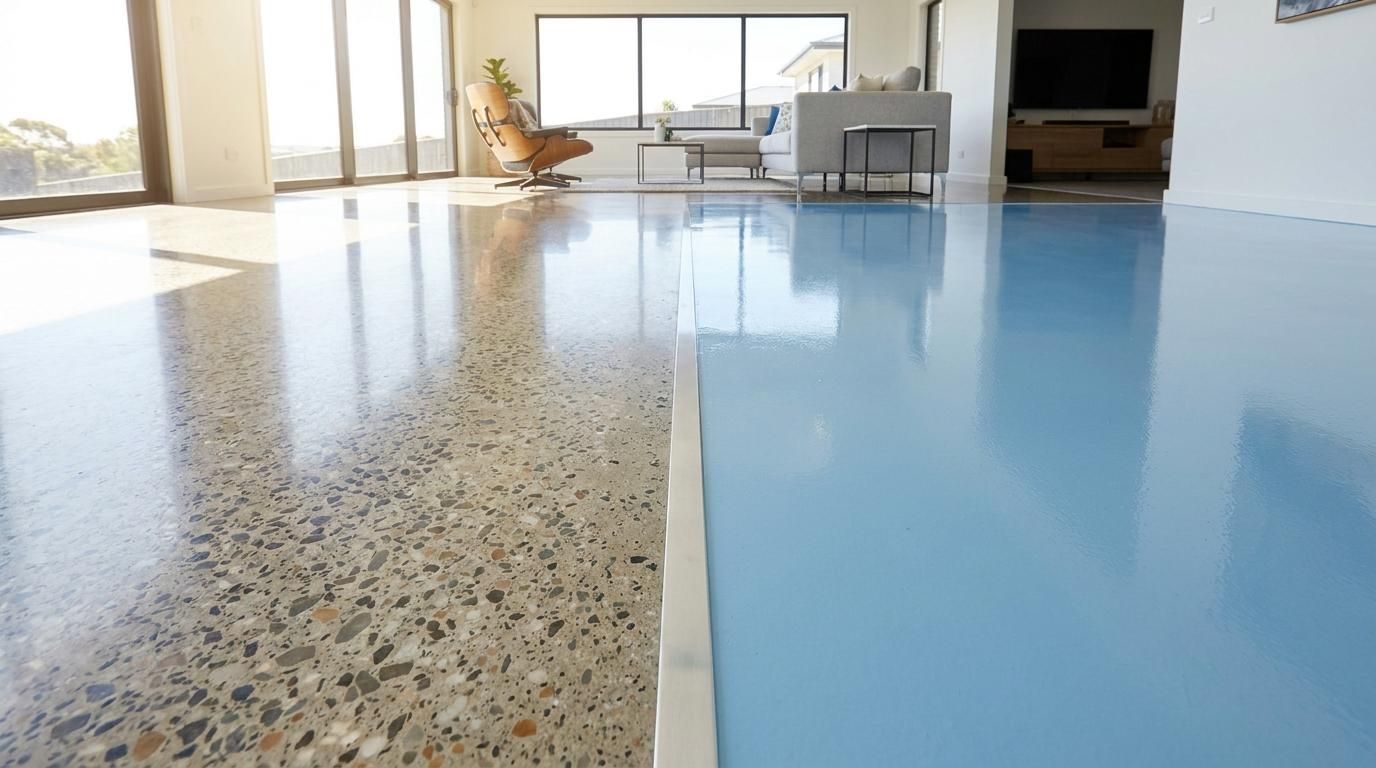
Polished concrete costs $3 to $8 per square foot and does not require periodic recoating under normal conditions. Epoxy runs $3 to $7 per square foot but typically requires full reapplication every 15 to 20 years, adding roughly $1,200 to $3,500 in lifetime cost on a standard 400-square-foot space. The per-square-foot prices look close on day one, but Lubbock's 263 sunny days per year separate the two finishes far more than the upfront cost does. The difference shows up most clearly after five years of West Texas sun.
Lubbock Concrete Coating offers concrete polishing and epoxy coating systems across Lubbock County. The sections below cover cost comparisons over a full lifecycle, how each finish handles West Texas UV and heat, which rooms each one fits best, and the maintenance trade-offs that determine which finish is right for your space.
Cost Comparison
Upfront pricing for the two finishes overlaps more than most homeowners expect.
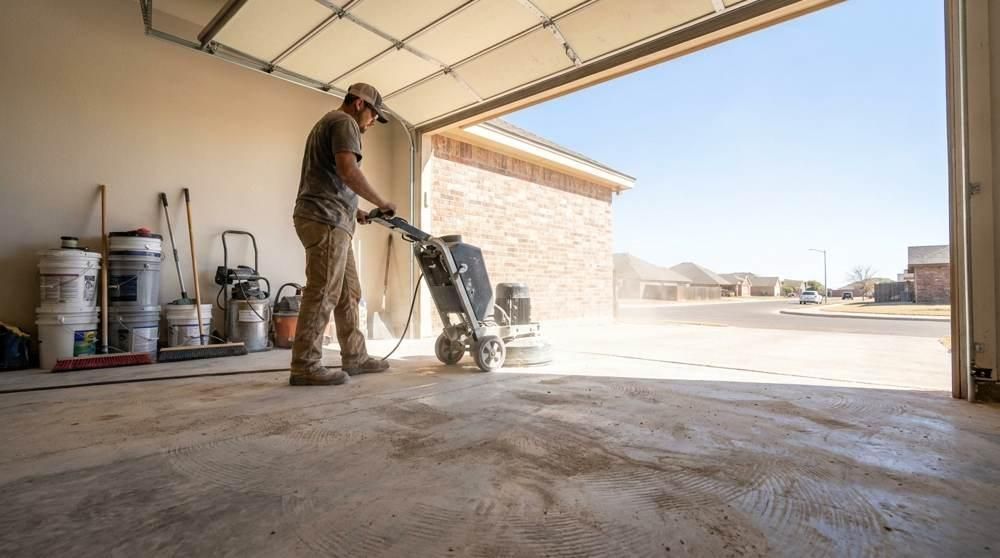
- Polished concrete: $3 to $8 per square foot, depending on gloss level. A standard 400-square-foot garage or living area runs $1,200 to $3,200 total.
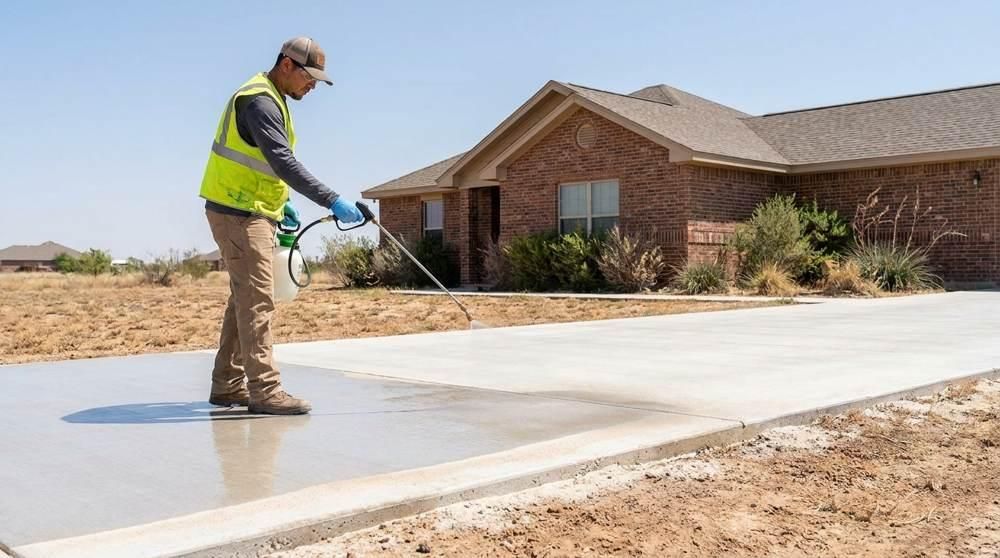
- Epoxy coating: $3 to $7 per square foot for a professional multi-layer system. The same 400-square-foot space runs $1,200 to $2,800.
The per-foot numbers are close, but long-term costs diverge. Polished concrete needs only periodic rebuffing every five to seven years in a residential setting. Epoxy and polyaspartic coatings need full reapplication every 15 to 20 years, adding another $1,200 to $3,500 in material and labor to the project's lifetime cost.
For a complete breakdown of all coating prices in the Lubbock area, see our concrete coating cost guide.
Durability and Maintenance in West Texas
Both finishes handle foot traffic and daily wear, but West Texas climate stresses them in different ways over time.
UV Resistance
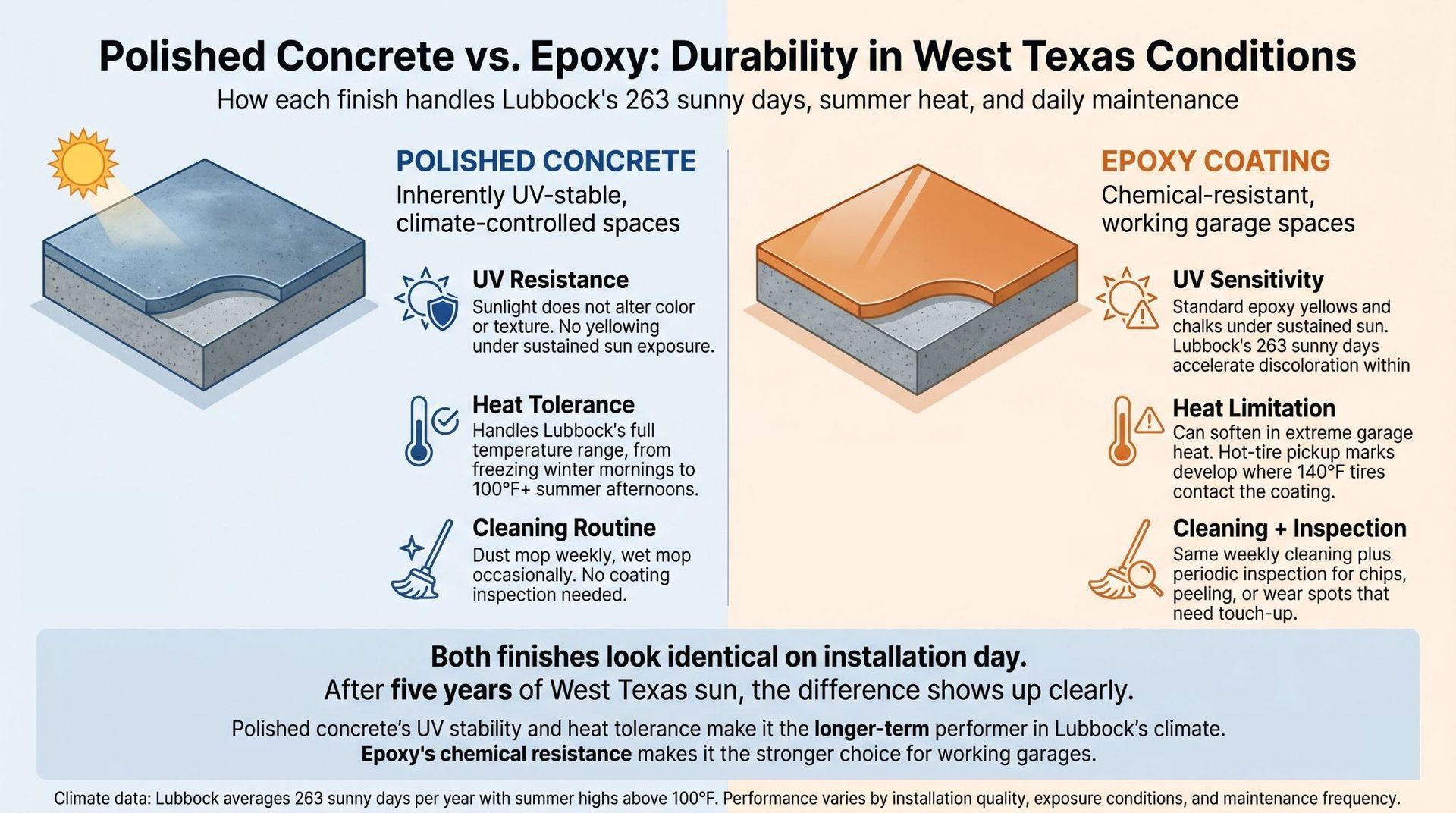
Polished concrete is inherently UV-stable. Sunlight does not alter its color or texture under normal exposure conditions. Epoxy, unless formulated with UV inhibitors, yellows and chalks under sustained sun. In a garage with windows or a south-facing door, Lubbock's 263 sunny days per year accelerate the discoloration noticeably within two to three years.
Heat and Temperature Swings
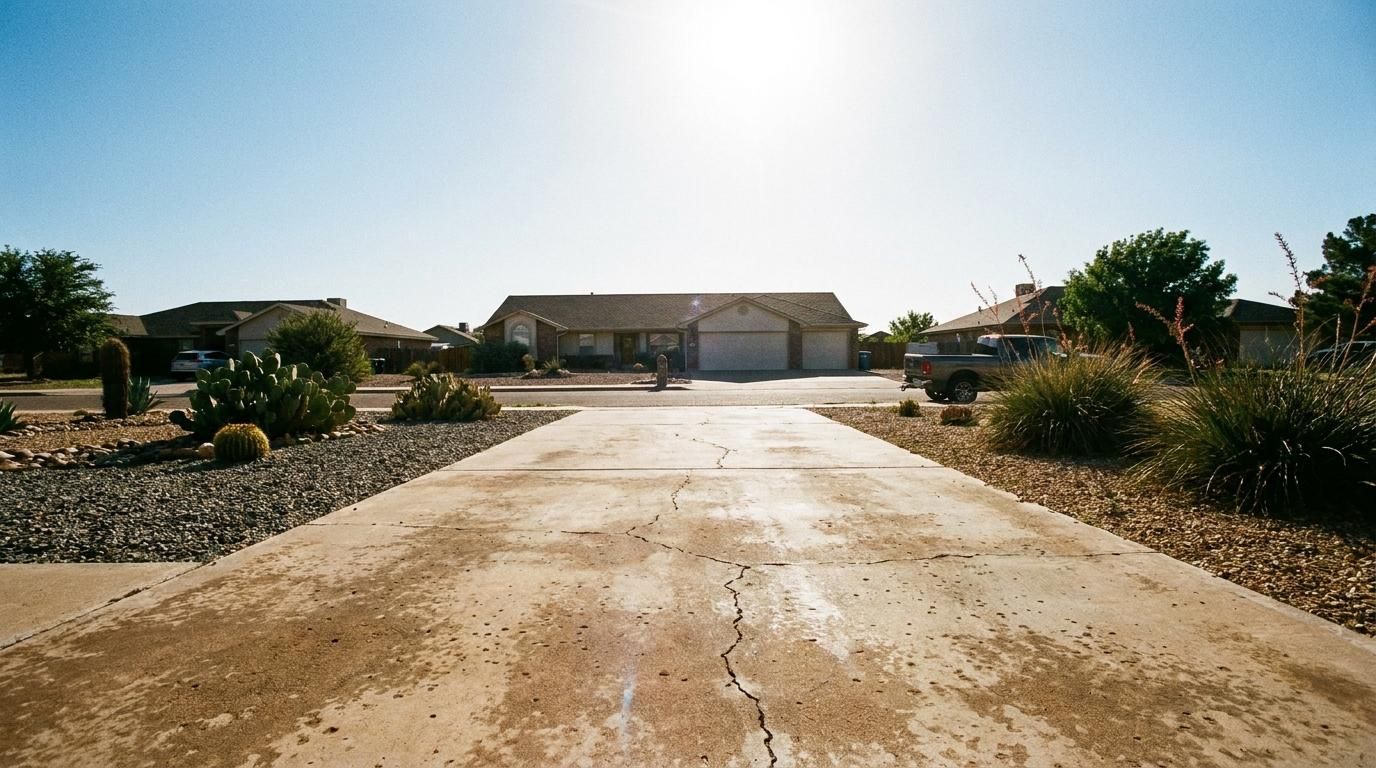
Polished concrete tolerates Lubbock's full temperature range, from below-freezing winter mornings to 100-degree-plus summer afternoons, without the delamination or softening that can affect some coating systems. Standard epoxy can soften in extreme garage heat and develop hot-tire pickup marks where tires heated on 140-degree asphalt transfer enough warmth to pull at the coating surface.
Cleaning and Upkeep
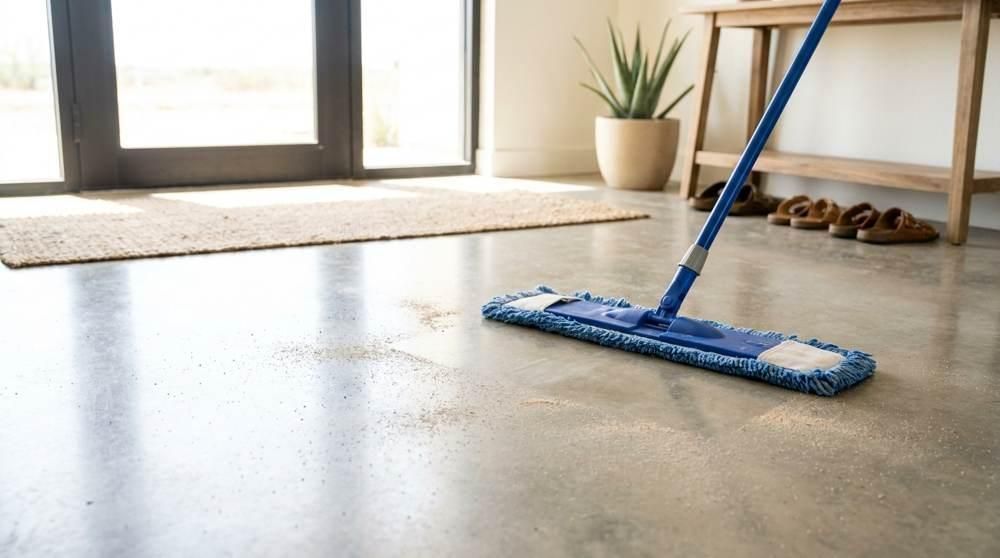
Maintaining polished concrete requires a dust mop and an occasional wet mop. Epoxy requires the same cleaning routine plus periodic inspection for chips, peeling, or wear spots that need touch-up before they spread.
Which Finish Fits Which Room
The stronger choice depends on how the space gets used day to day.
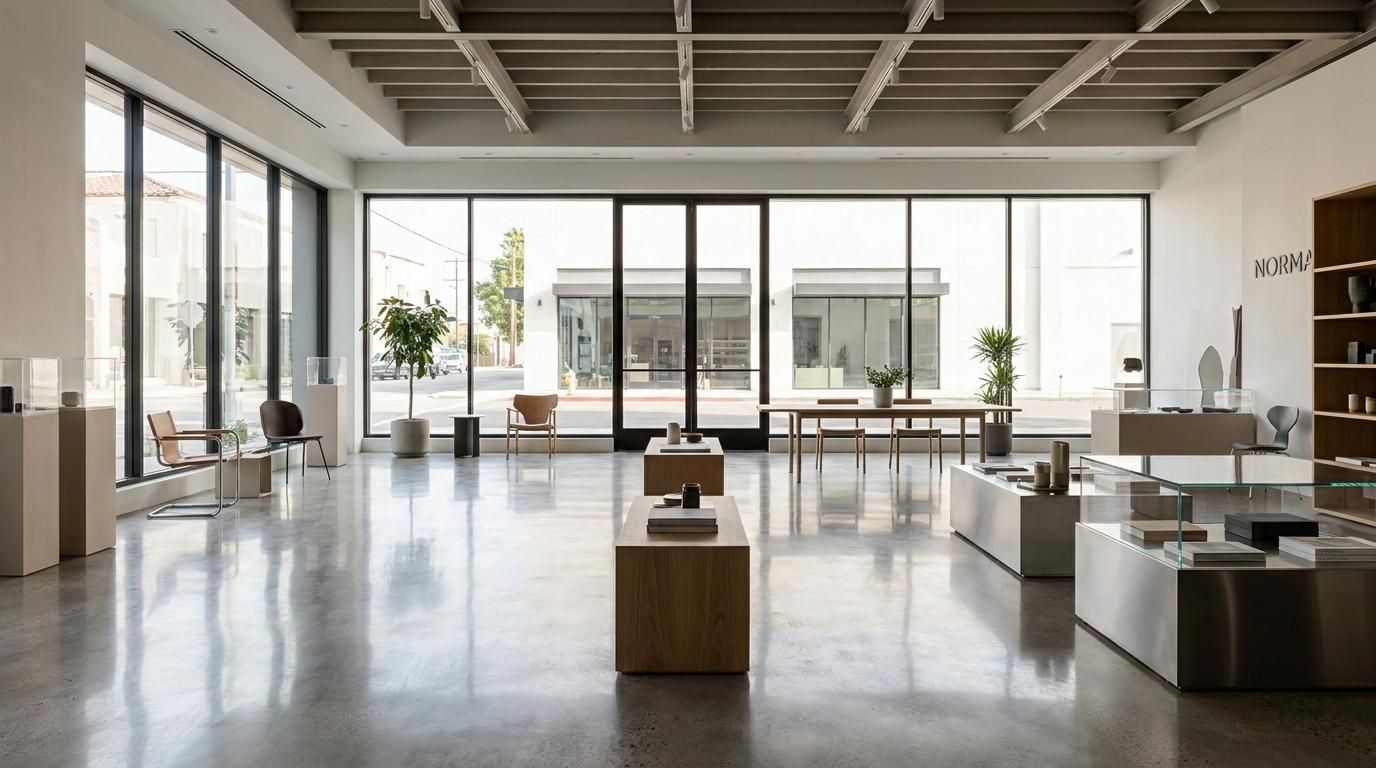
Polished concrete works well in living areas, basements, retail showrooms, and commercial lobbies where the natural look of the slab is part of the design. It handles foot traffic without developing wear patterns and stays clean with minimal effort. Spaces that remain climate-controlled get the most value from the finish.
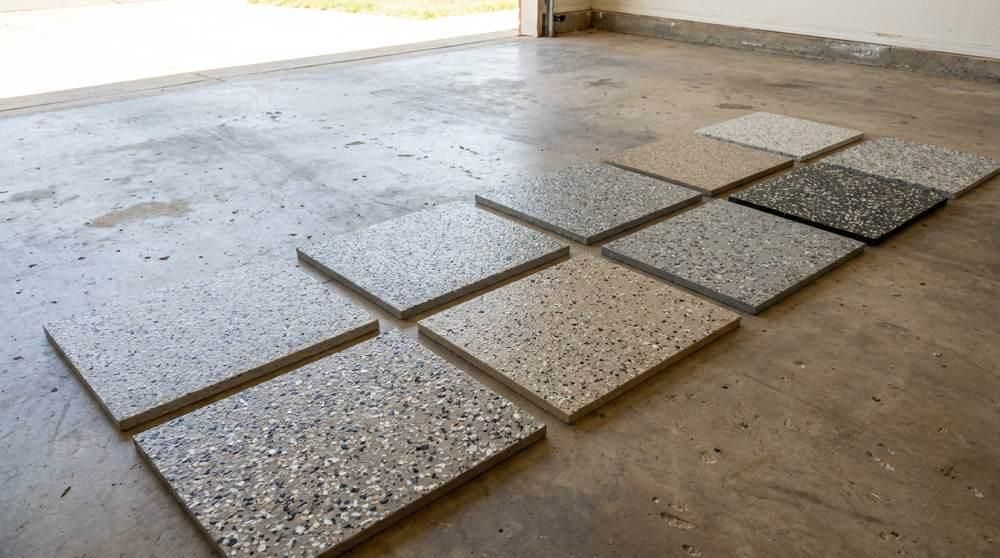
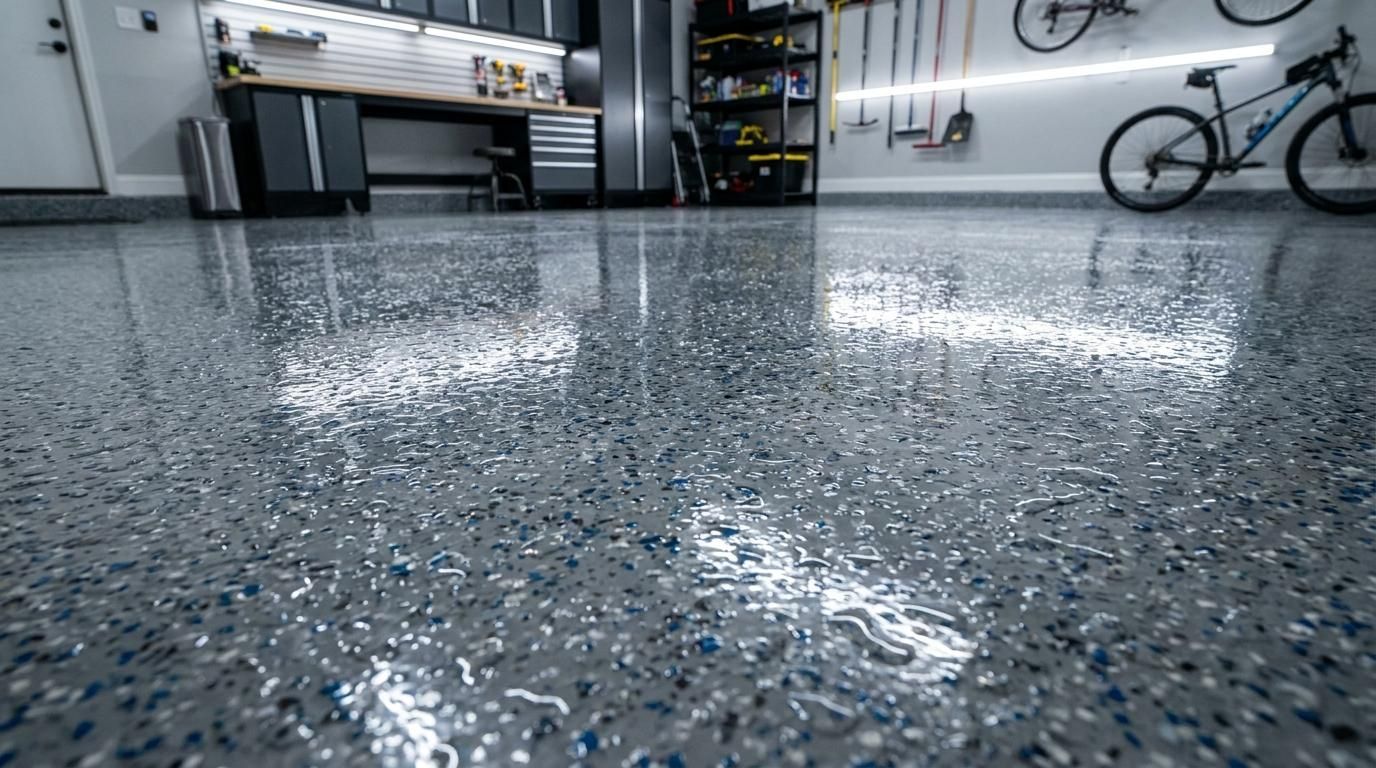
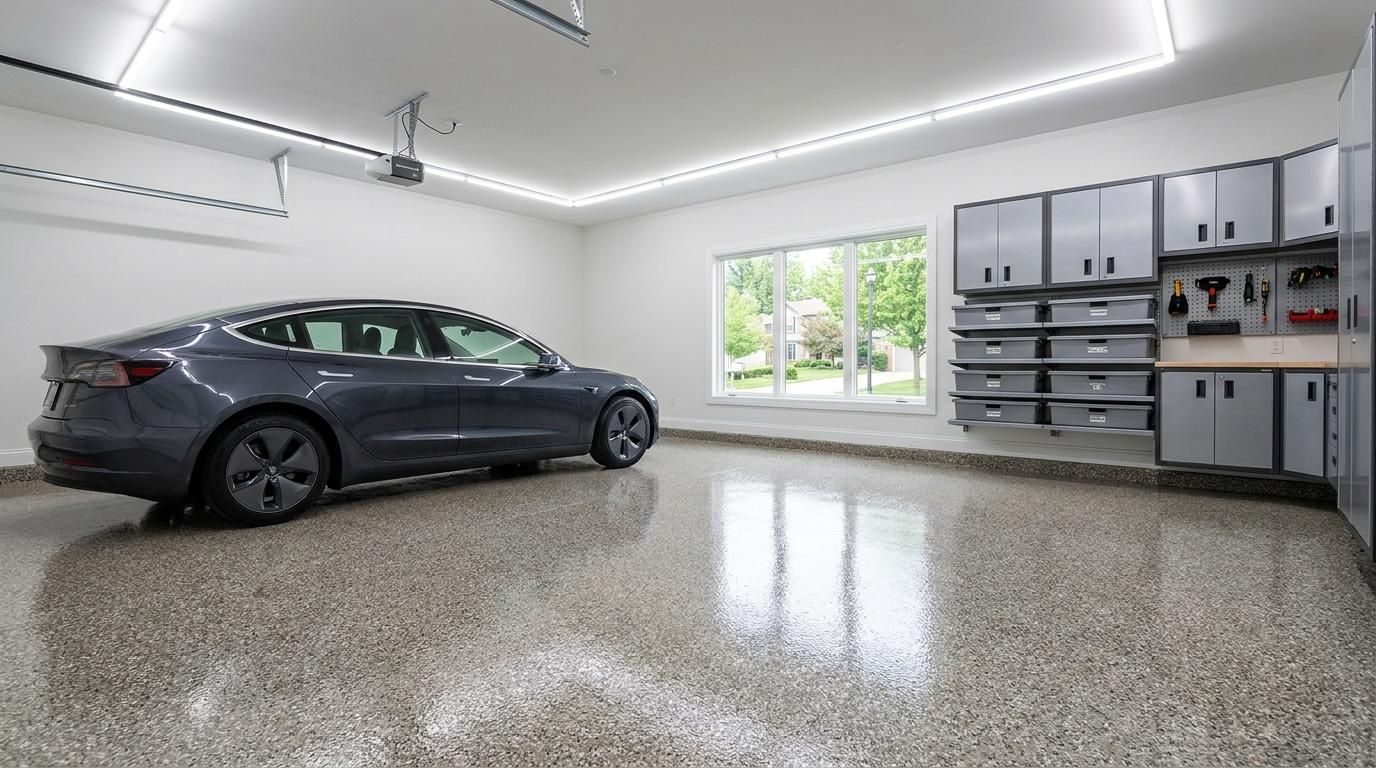
Epoxy or polyaspartic coatings are a stronger fit for garage floors , workshops, and utility areas that face chemical spills, heavy impact, or standing moisture. The sealed coating surface sheds oil, resists tire marks, and cleans up fast after project work.
For homeowners considering options beyond these two, our guide to the 5 best alternatives to epoxy flooring covers additional choices with pros and cons for each.
Frequently Asked Questions
Is polished concrete more durable than epoxy?
Polished concrete outlasts epoxy in UV-intensive environments because sunlight does not degrade its surface. In Lubbock, where 263 sunny days per year accelerate coating breakdown, polished floors maintain their appearance longer without intervention. Epoxy holds up better against chemical spills and heavy impact in working garage settings.
Can you apply epoxy over polished concrete?
Applying epoxy directly over polished concrete does not work. Epoxy needs a porous surface to bond, and polished concrete is densified and sealed. Switching from polished to coated later requires mechanical grinding to reopen the pores before any coating system can adhere properly.
Which finish is better for a Lubbock garage?
Epoxy or polyaspartic coatings are the more practical choice for a working garage. They resist oil stains, hot-tire marks, and chemical spills better than a polished surface. Lubbock Concrete Coating installs both options, but for a garage that handles daily vehicle traffic and project work, a coating system provides stronger protection.
What Lubbock's Sun Reveals After Five Years
Both finishes look sharp on installation day. The difference shows up after a few summers, when polished concrete's natural UV stability holds the surface intact while standard epoxy starts to yellow, chalk, and develop hot-tire marks where the heat has softened the coating.
For climate-controlled living areas, basements, and retail spaces where aesthetics and minimal maintenance matter most, polished concrete delivers the better lifetime value. For working garages and utility spaces that face oil spills, chemical exposure, and daily impact, epoxy or polyaspartic coatings provide the chemical resistance the slab actually needs.
Lubbock Concrete Coating installs both systems, which means the recommendation isn't tied to what we sell, but what fits the space. Contact us at (806) 701-3436 or schedule a free estimate online to explore which finish works for your floor.