
How to Clean Your Epoxy Garage Floor the Right Way

Robert Hernandez • June 29, 2026

Cleaning an epoxy garage floor consists of a simple routine: pull the dust off dry, mop with a mild pH-neutral cleaner, and give it a rinse so no film is left behind. For Lubbock homeowners, that routine protects the gloss and texture of a professional garage floor coating without grinding caliche dust into the finish. A coated garage almost always wears out from abrasion and chemical residue, not from ordinary foot traffic.

A homeowner near Shallowater recently asked why a freshly cleaned floor still looked hazy after every dust storm. The coating was fine, but the mop water was carrying fine grit across the surface. Discover the weekly routine you can use, the right way to handle oil and tire marks, and the point where a cleaning problem is really a wear problem.

What Should You Use on an Epoxy Garage Floor?

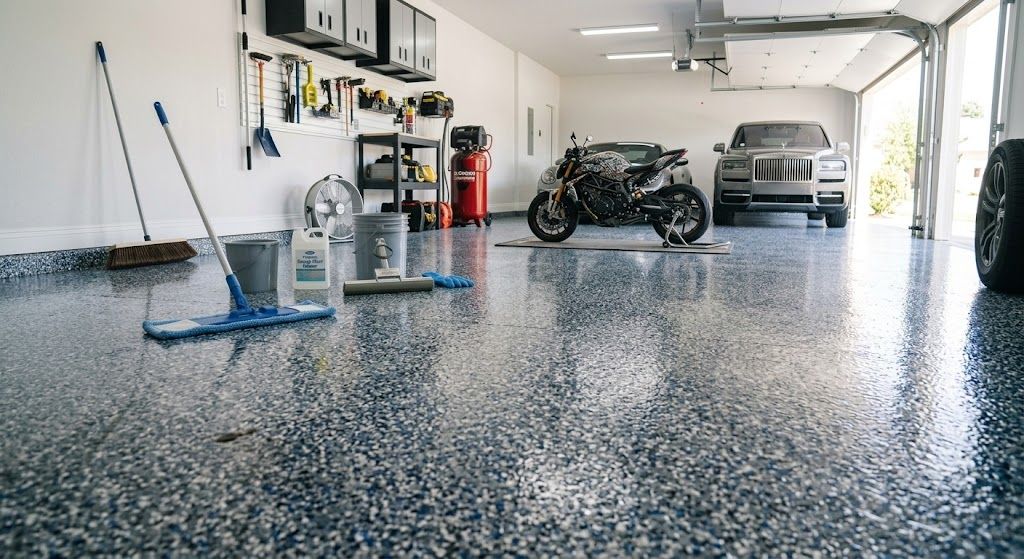
The best cleaning tools are gentle enough to protect the topcoat but firm enough to lift West Texas dust. Epoxy and polyaspartic garage floors resist oil, chemicals, and tire marks better than bare concrete, yet the surface still needs the right routine.

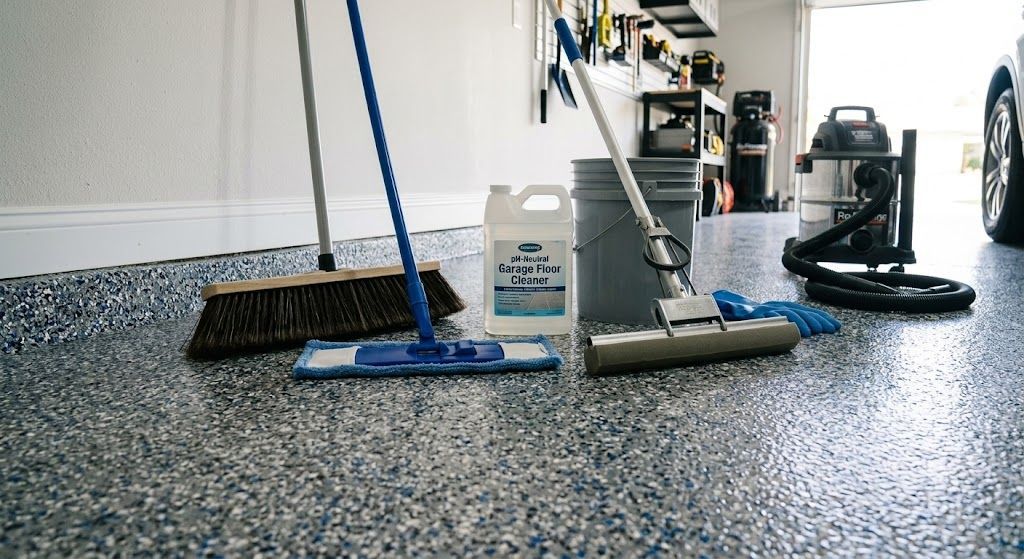
Use this basic kit for regular cleaning:

  • A soft-bristle broom or dust mop for dry debris.
  • A shop vacuum for corners and expansion joints.
  • Warm water mixed with a pH-neutral floor cleaner.
  • A microfiber mop or soft foam squeegee.
  • Clean rinse water for removing cleaner film.

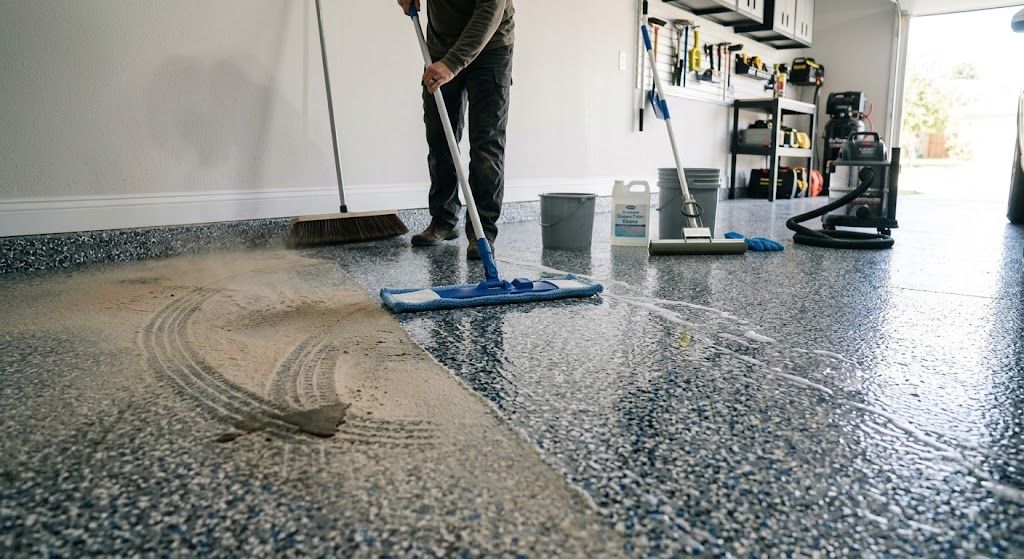
Dry cleaning matters first because Lubbock dust often contains fine caliche grit. If you push that grit around with a wet mop, it acts like very light sandpaper. The finish may not fail right away, but repeated abrasion can dull high-traffic lanes.

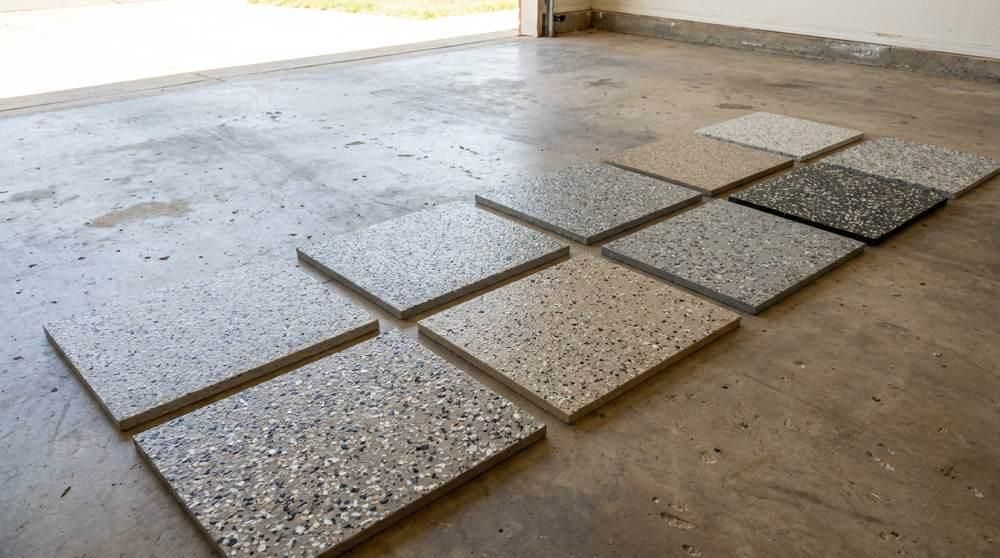
It also helps that the floor was designed to hide this dust in the first place, a neutral flake color blend disguises the caliche grit that shows up between cleanings, so the surface looks cleaner for longer with the same effort.

Cleaning products to skip

Avoid bleach, ammonia, citrus degreasers, vinegar, and abrasive powders on coated garage floors. Strong cleaners can haze the clear coat or leave residue that attracts more dust. Steam mops are also a poor fit because heat and pressure can stress weak spots near chips or cracks.

DIY epoxy kits usually have thinner films than professional coatings. The client profile notes that professional systems can be three to five times thicker than store-bought products. If your floor is peeling or soft, review common epoxy floor problems before scrubbing harder.

How Do You Clean Dust, Oil, and Tire Marks?

A good cleaning routine separates loose grit, water-soluble dirt, and oily residue. Treating every mess the same way wastes effort and can spread stains across the floor.

Weekly dust and mop routine

Start by opening the garage door and sweeping from the back wall toward the driveway. Vacuum corners, around storage shelves, and beside the garage door seal. Mix mild cleaner with warm water, then mop in small sections.

Rinse the mop often. Dirty mop water is the main reason a floor looks cloudy after cleaning. Finish with clean rinse water if the surface feels tacky under your shoes.

For a two-car garage, the weekly routine usually takes 20 to 30 minutes. Garages near open fields, unpaved alleys, or new construction may need dry dusting twice per week during windy months.

Oil, tire marks, and sticky spills

Blot fresh oil first instead of wiping it outward. Apply pH-neutral cleaner directly to the spot, wait a few minutes, then scrub with a soft nylon brush. Rinse until the floor no longer feels slick.

Warm tire marks need patience. Let the floor cool before cleaning because hot rubber residue smears more easily. If marks return quickly, your topcoat may be wearing thin in parking lanes.

Lubbock Concrete Coating serves homeowners across West Texas and Eastern New Mexico, including Wolfforth, Shallowater, and nearby communities. We’ve noticed how local garages collect wind-blown dust faster than many indoor floors, so cleanup should match that exposure.

Seasonal Lubbock upkeep

Spring dust storms and summer heat change how you maintain the floor. After a heavy dust event, dry sweep before any wet cleaning. During triple-digit stretches, clean early in the morning so water and cleaner do not flash-dry into streaks.

If your garage doubles as a workshop, place mats under saws, motorcycles, and lawn equipment. Mats catch metal shavings, gas drips, and fertilizer granules before they sit against the coating.

Frequently Asked Questions

Can I use a pressure washer to clean an epoxy garage floor?

A pressure washer can be too aggressive for an epoxy garage floor, especially near chips, seams, or older coating edges. A garden hose, soft brush, and pH-neutral cleaner are safer for most residential garages. If you use pressure, keep the nozzle wide and avoid aiming at damaged spots.

Why does my epoxy floor look cloudy after mopping?

Cloudiness usually comes from leftover cleaner, dirty mop water, or fine caliche dust spread across the surface. Rinse the floor with clean water and dry it with a foam squeegee. If the haze stays after rinsing, the clear coat may have abrasion or chemical damage.

How often should Lubbock homeowners deep clean a coated garage floor?

Most Lubbock homeowners should deep clean a coated garage floor every one to three months. Homes near dirt roads, active construction, or open fields may need it more often. Lubbock Concrete Coating recommends dry dusting between washes so grit does not scratch the surface.

Keep Your Garage Floor Easy to Live With

A clean epoxy garage floor doesn't need harsh chemicals or special equipment. The routine is simple: lift the grit off dry, clean spills before they spread, rinse away any residue, and skip the products that dull the topcoat. In Lubbock, that mostly means staying ahead of the dust.

If cleaning no longer brings the finish back, the issue is usually wear, prep, or coating age rather than dirt. Contact Lubbock Concrete Coating at 806-701-3436 and our team will assess your floor.

Neutral flake blends hide dust best
By Robert Hernandez June 25, 2026
Explore concrete coating colors and flake options for Lubbock garages, including neutral blends, contrast, texture, and maintenance.
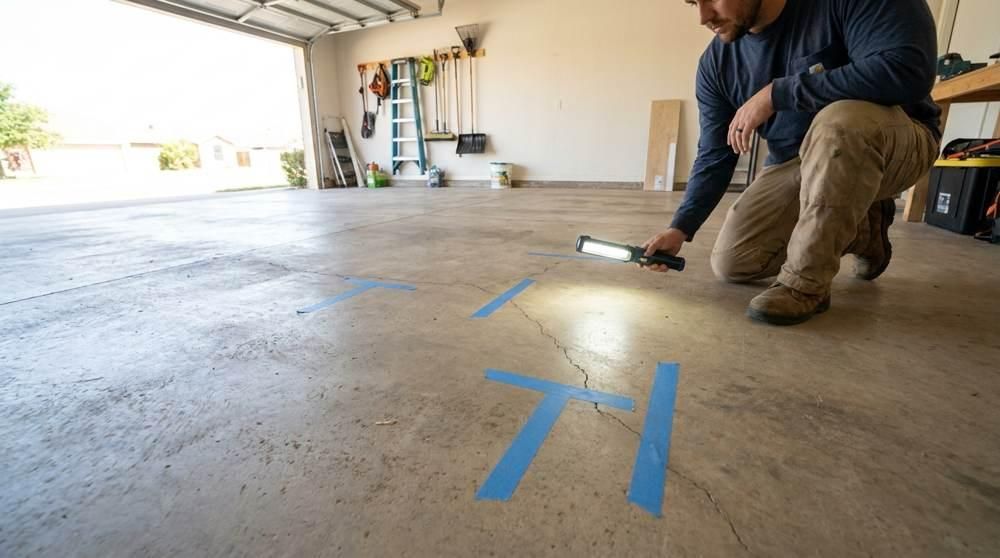
Diagnose the crack before filling it
By Robert Hernandez June 21, 2026
Learn how to fix a cracked concrete garage floor before coating. Read about diagnosing cracks, repair prep, and when coating makes sense.
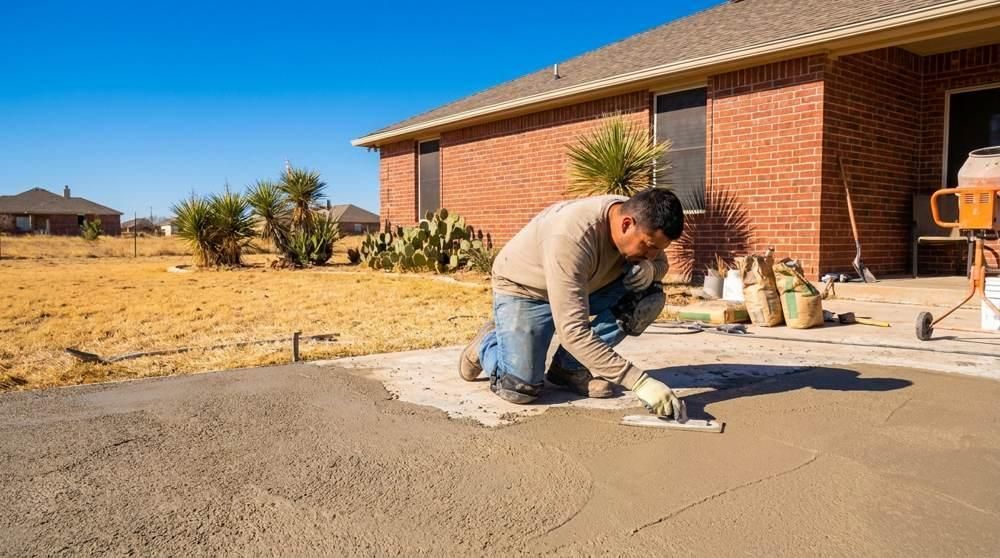
Coatings add color texture and protection
By Robert Hernandez June 18, 2026
Compare concrete patio resurfacing options for Lubbock homes, including coatings, sealing, texture, and heat-resistant finishes.
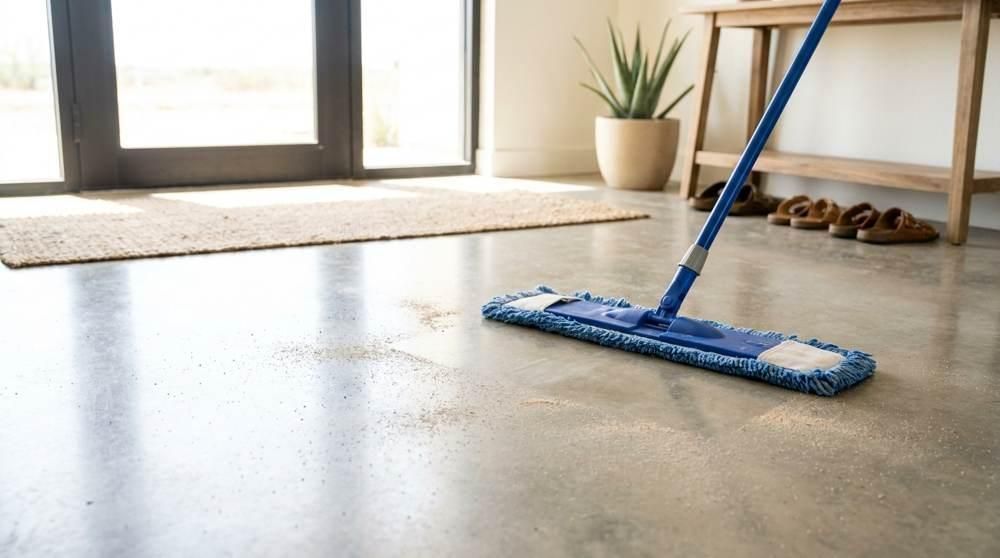
Daily care starts with dust control
By Robert Hernandez June 15, 2026
Polished concrete floor maintenance is simple when dust, grit, spills, and traffic are handled correctly. Get care tips for Lubbock floors.
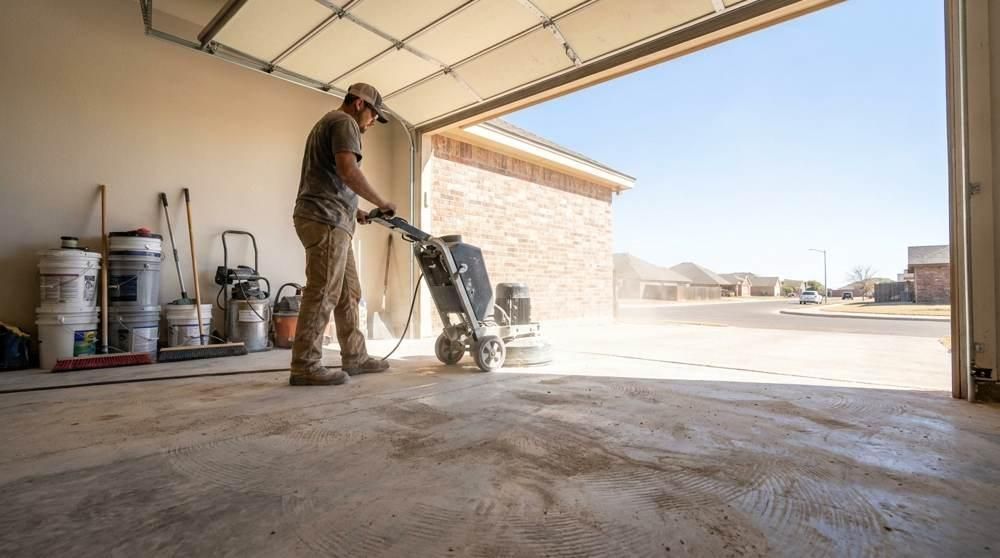
What drives garage floor resurfacing cost
By Robert Hernandez June 10, 2026
Garage floor resurfacing costs in Lubbock depend on prep, crack repair, coating chemistry, and finish. See how much to budget for in 2026.
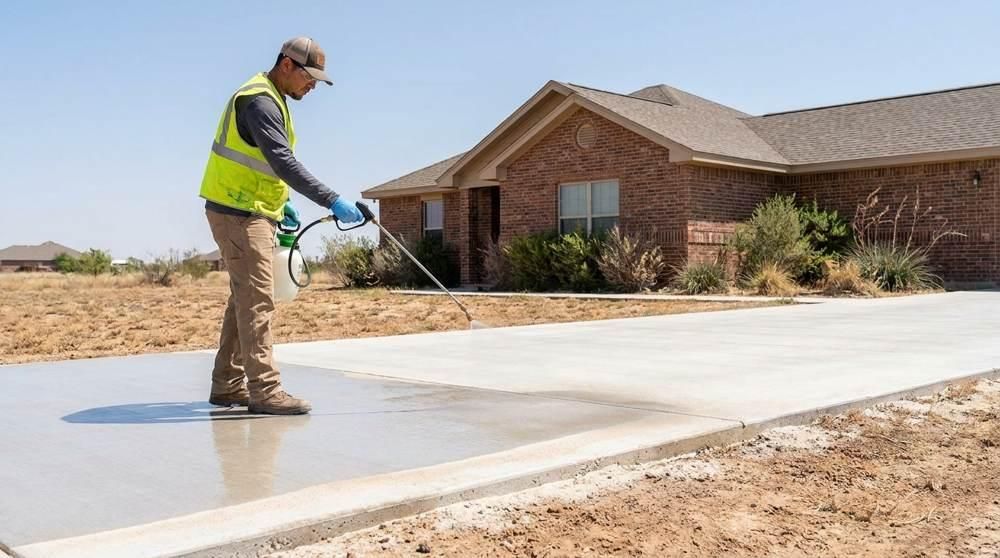
What does concrete sealing price include
By Robert Hernandez June 6, 2026
Concrete sealing cost in Lubbock usually depends on prep, slab size, sealer type, and exposure. See what homeowners should budget in 2026.
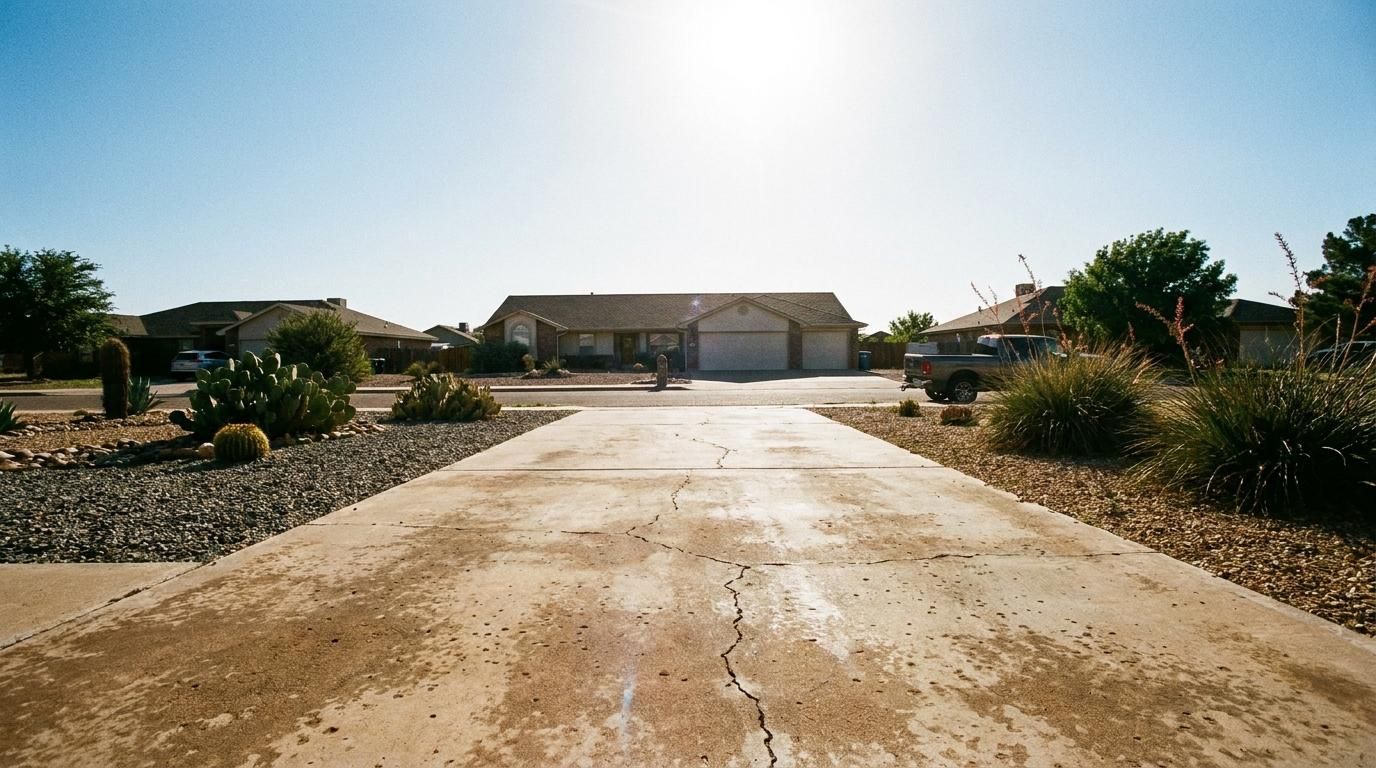
By Robert Hernandez May 29, 2026
Compare driveway coating options for Lubbock homes. See how sealers, epoxy, and polyaspartic finishes hold up to West Texas UV, heat, and caliche soil.
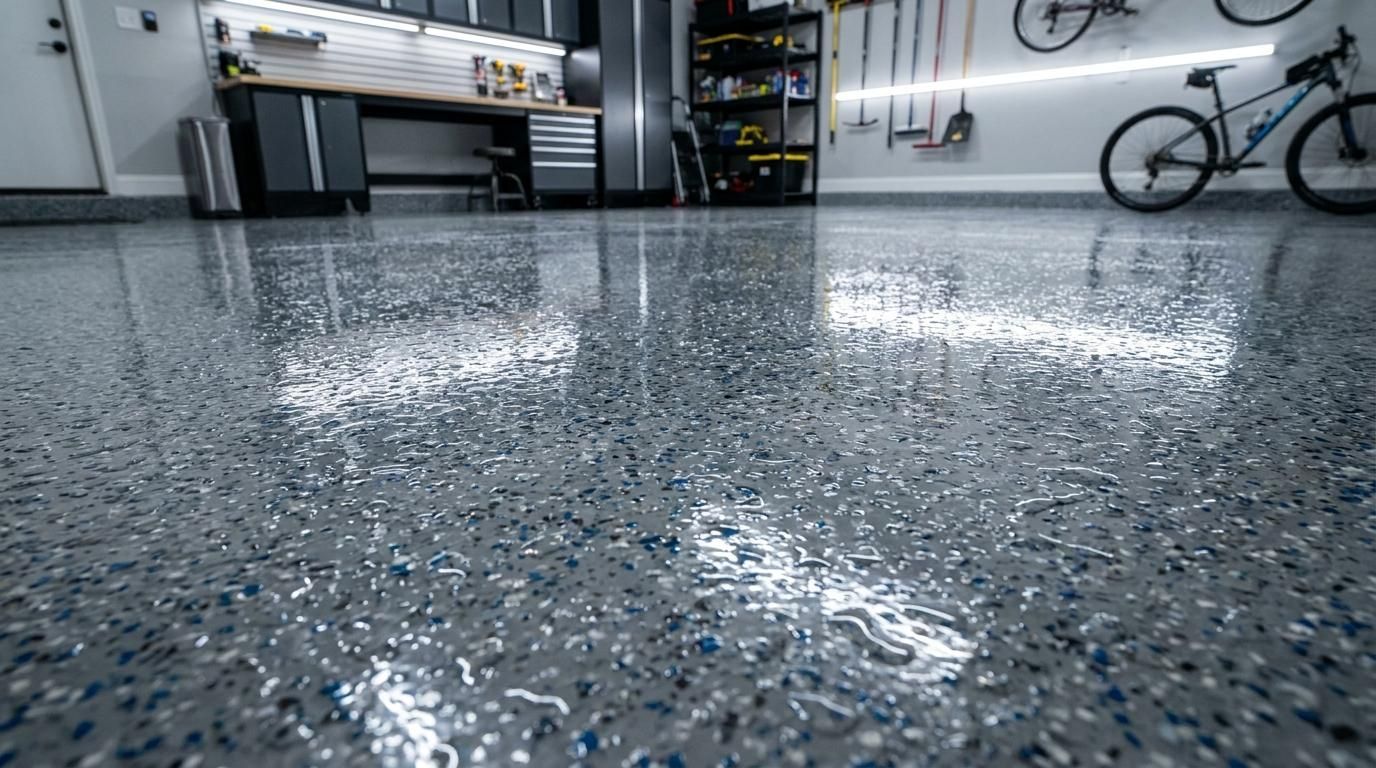
By Robert Hernandez May 25, 2026
Find out if epoxy garage floors are slippery when wet & what Lubbock homeowners can do about it. Concrete experts explain anti-slip additives & coating options.
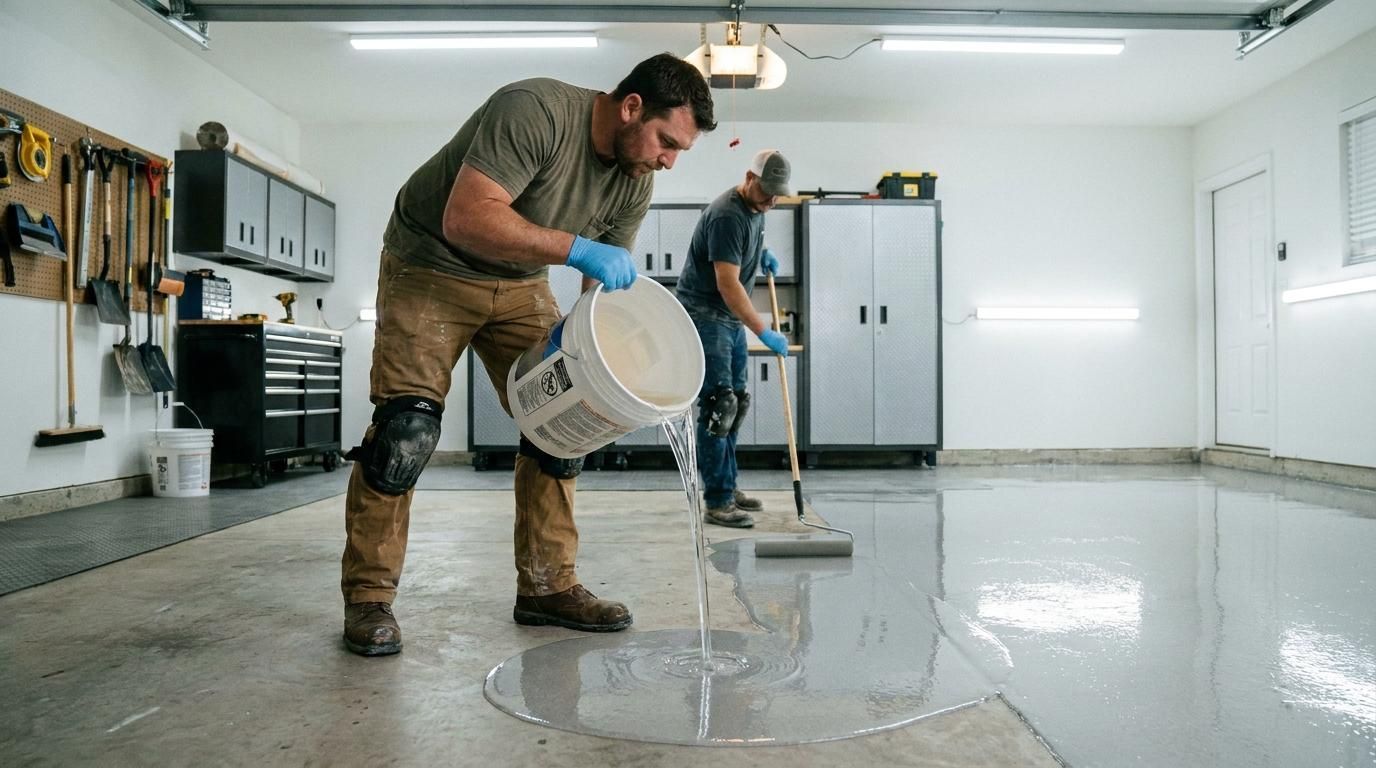
By Robert Hernandez May 21, 2026
Learn what polyaspartic coating is, how it differs from epoxy, and why Lubbock homeowners choose it for garages, patios, and driveways.