How to Fix a Cracked Concrete Garage Floor in Lubbock Before Coating
Fixing a cracked concrete garage floor starts with a solid assessment: figuring out whether the crack is a stable hairline, a dirty surface line, a moisture-related crack, or a sign the slab is still moving. Lubbock Concrete Coating prepares slabs before installing garage floor coatings, because epoxy and polyaspartic systems only perform when the cracks underneath them are repaired correctly first.
A crack is merely a symptom. It doesn’t tell the whole story. Some are ordinary shrinkage lines that clean up and fill easily. Others point to slab movement, moisture pressure, or weak edges that keep breaking under vehicle weight. The fix must be executed in the right order: diagnosis, then surface prep, then coating, and only once the concrete is actually ready.
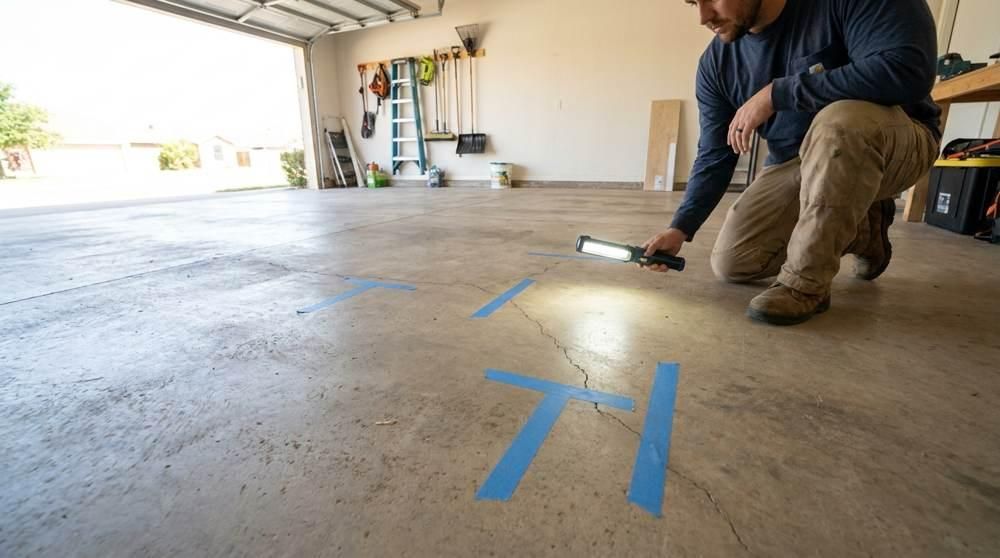
Diagnose the Crack Before Filling It
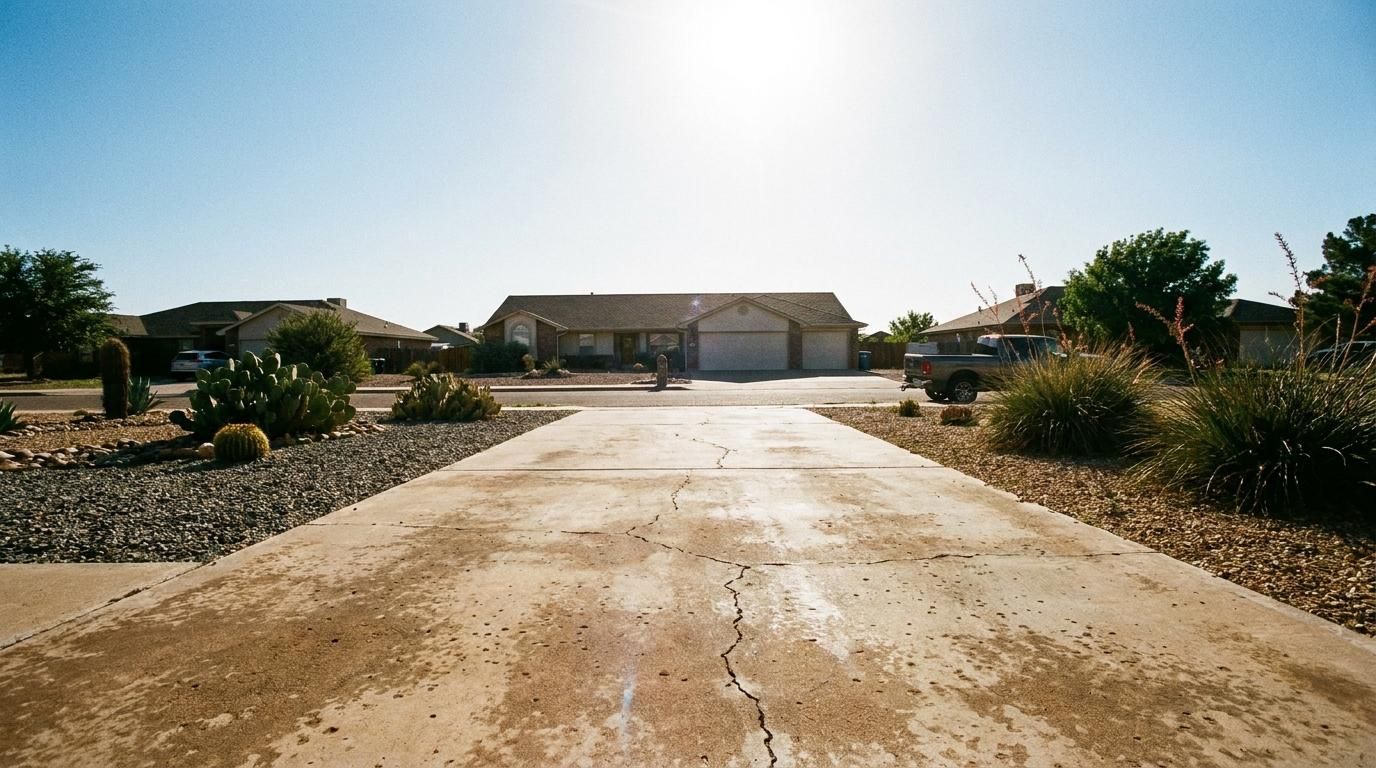
A narrow, stable hairline crack is different from a crack with height difference, crumbling edges, or moisture staining. Hairline cracks can often be cleaned, opened slightly, filled, and ground flush before coating. A crack with movement needs more caution because the slab may keep shifting after the finish is installed.
Look for Signs of Moisture
Look for stains, white mineral deposits, or damp edges around the crack. Those signs can point to moisture moving through the slab. Coating over moisture without addressing the source can cause bubbles or peeling later. Moisture beneath the surface causes many of the most common epoxy floor problems that homeowners encounter.
Lubbock garages also deal with caliche dust and temperature swings. Dust settles into open cracks, and seasonal movement can widen weak spots. A repair that ignores those conditions may look smooth on day one and reopen after regular vehicle traffic.
Repair Steps Before Coating a Garage Floor
To ensure a durable, long-lasting garage floor finish, every crack must be addressed through a rigorous, systematic repair process before any topcoat is applied.
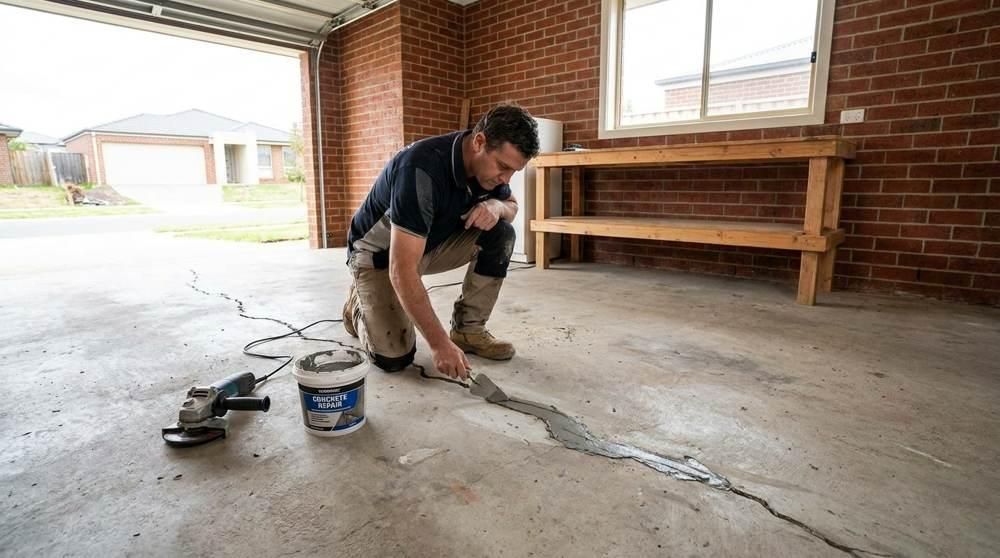
1. The Step-by-Step Repair Process
Crack repair follows a strict, practical order to ensure the final finish doesn't fail. The goal is to create a stable surface that primer and coating can permanently bond to.
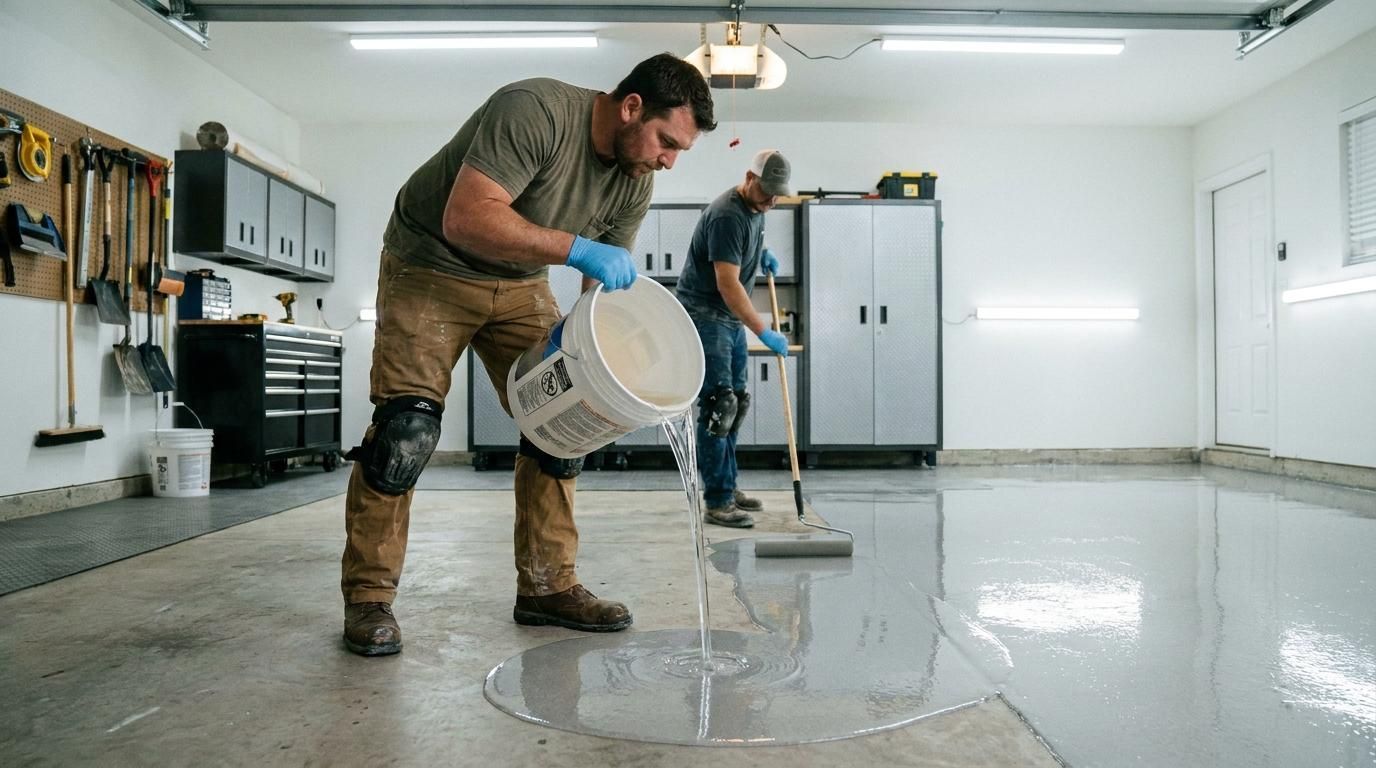
The professional repair sequence includes:
- Cleaning: Debris is cleared out from the crack.
- Removal: All loose or crumbling concrete material is routed out.
- Filling: A commercial-grade concrete repair product is placed into the gap.
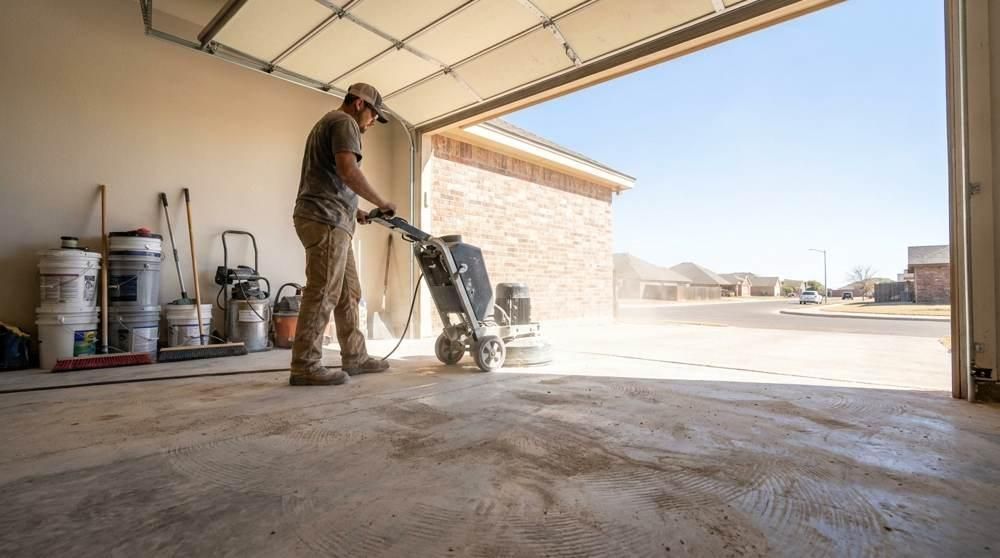
- Grinding: The surface is ground perfectly flat and smooth after curing.
2. Choosing the Right Repair Product
Professional repair products vary by crack size and movement risk. Lubbock Concrete Coating evaluates the slab before recommending an epoxy or polyaspartic system, because the coating choice cannot compensate for a weak repair underneath:
- Rigid Fillers: Used to lock stable, non-moving cracks in place.
- Flexible Materials: Considered for areas where slight concrete movement is expected.
3. Understanding Costs and Budgeting
Crack repair commonly runs about $8 to $18 per linear foot, depending on width, contamination, and spalling. A floor with many broken edges may need more prep work than the coating itself suggests.
Because that prep work is part of the overall project, it's worth noting how crack repair fits into the bigger garage floor resurfacing budget before comparing quotes. Ultimately, the quality of the repair line is often what separates a lasting floor from a cheap one.
Frequently Asked Questions
Can epoxy fill cracks in a garage floor?
Epoxy can fill some stable garage floor cracks when the crack is properly cleaned and prepared first. Coating material alone should not be used as the repair plan. Loose edges, dust, oil, or moisture inside the crack can keep the filler from bonding and lead to visible failure.
Should I repair garage floor cracks before coating?
Garage floor cracks should be repaired before coating because coatings need a stable and clean surface to bond correctly. Unrepaired cracks can telegraph through the finish or reopen under tire traffic. Repairing first gives the primer and topcoat a better chance to perform as a system.
Can Lubbock Concrete Coating coat a cracked garage floor?
Lubbock Concrete Coating can coat a cracked garage floor when the cracks are stable enough to repair before installation. The company installs two-day epoxy and polyaspartic systems, but those systems still require proper slab preparation. Active structural movement may need a different repair conversation before coating.
Repair First, Then Choose the Coating
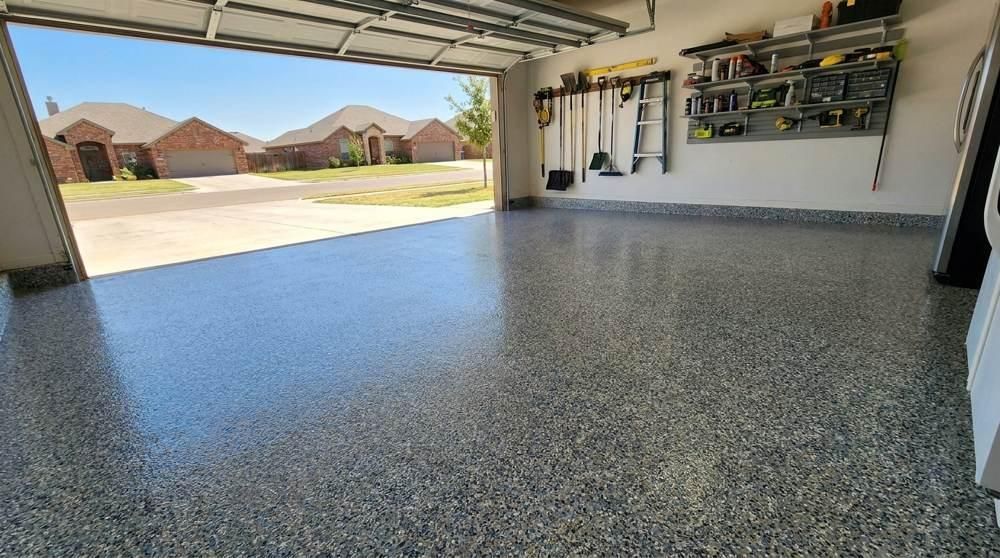
A cracked garage floor in Lubbock can usually be coated, but only after the crack is properly diagnosed and repaired. That order matters, because a stable shrinkage crack, a moisture-related crack, and a moving crack each call for a different fix. The coating can't make up for a repair that was skipped underneath it.
If your garage floor has cracks, stains, or an old coating that needs a look, contact Lubbock Concrete Coating at 806-701-3436.