Are Epoxy Garage Floors Slippery When Wet? Safety Guide for Lubbock Homeowners
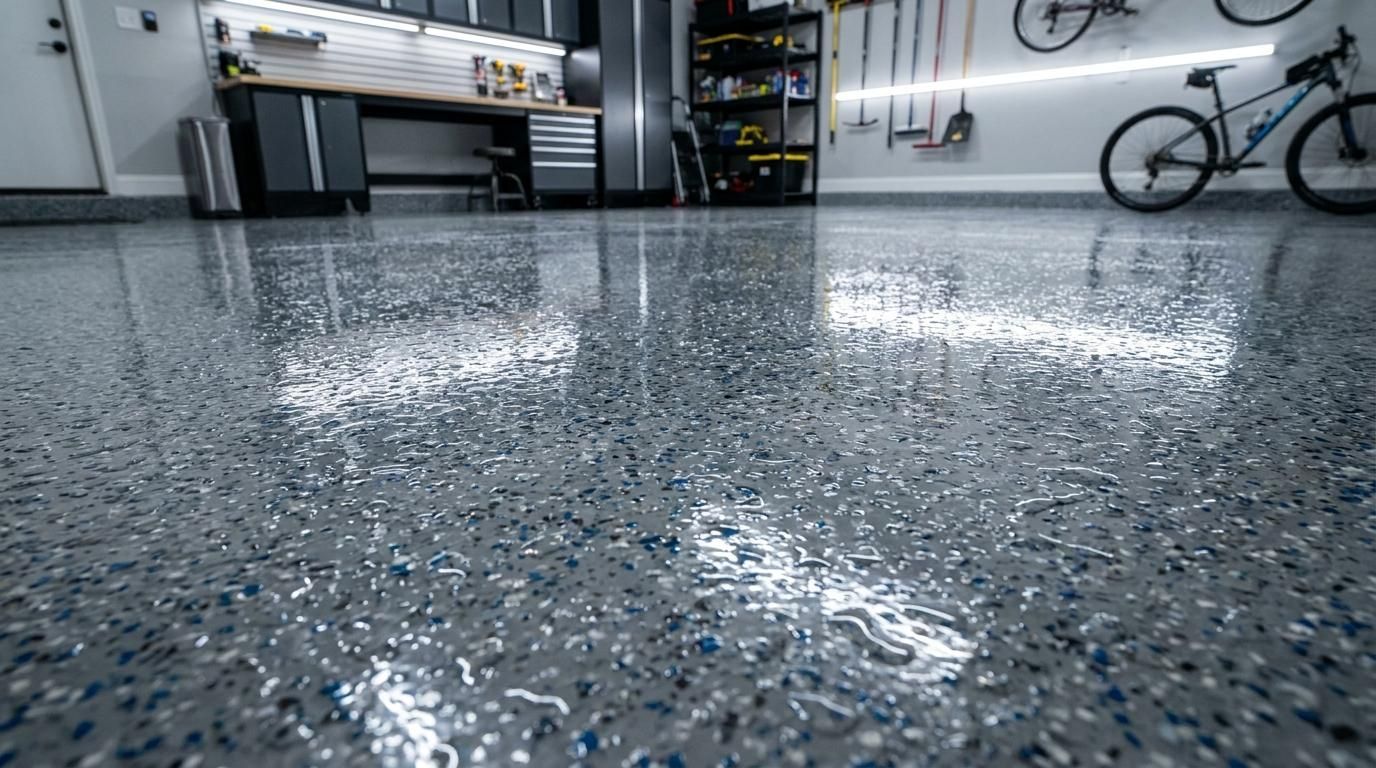
Yes, epoxy garage floors can be slippery when wet, but only when the coating has a smooth, high-gloss finish without anti-slip additives or texture. Water, oil, and the caliche dust that settles on Lubbock surfaces after a haboob reduce traction on untreated epoxy in the same way they would on polished tile. The fix happens at the topcoat stage. Three standard anti-slip additives (aluminum oxide grit, silica sand, and decorative flake broadcast) build traction directly into the coating. The right one depends on how the floor will be used and how the finish should look.
Lubbock Concrete Coating adds anti-slip aggregates to every garage floor coating system across Lubbock County. The blog post below explains why smooth epoxy gets slippery in the first place, the three additives that solve the problem, and how polyaspartic systems handle wet conditions differently than standard epoxy.
Why Epoxy Gets Slippery When Wet
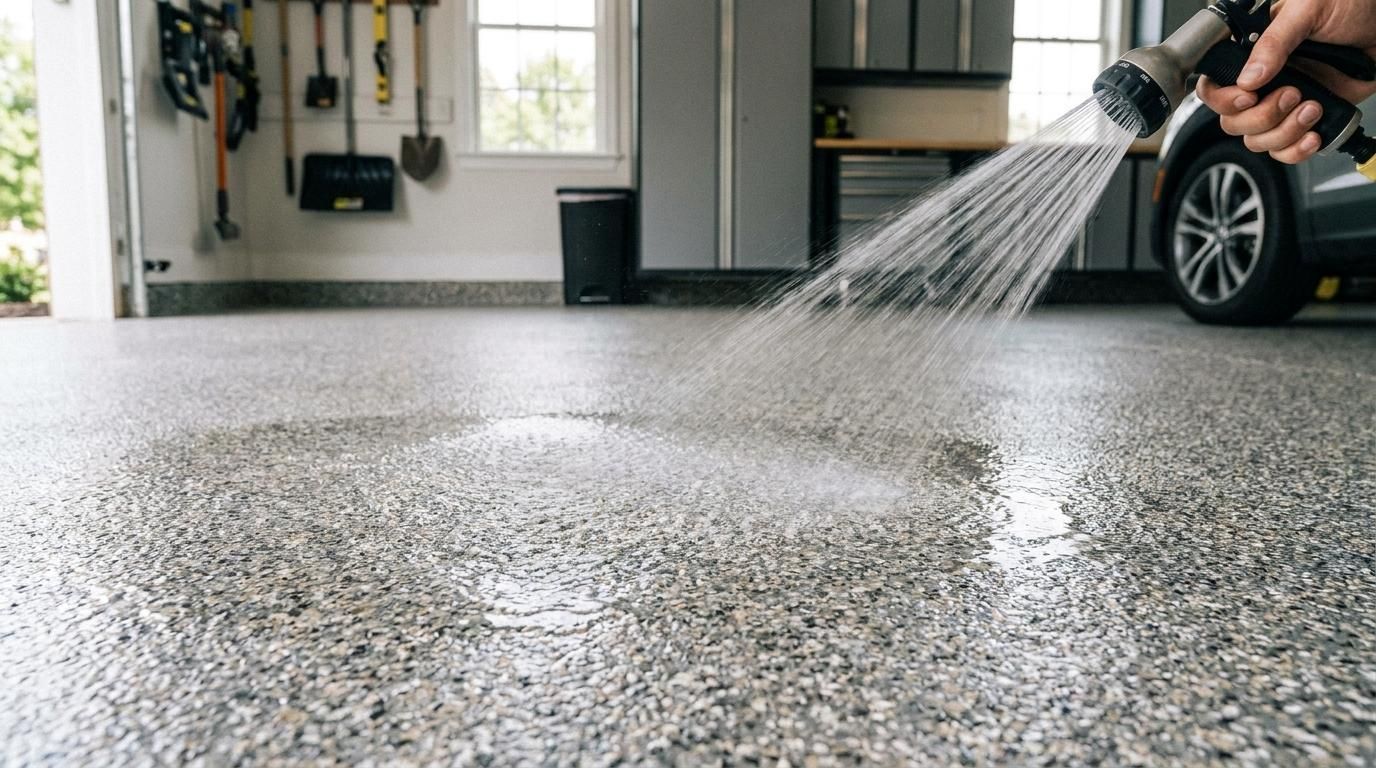
Epoxy creates a sealed, non-porous surface. That sealed quality is what makes it resist stains, oil, and chemicals. It also means water sits on top of the coating instead of absorbing into the concrete the way it would on a bare slab.
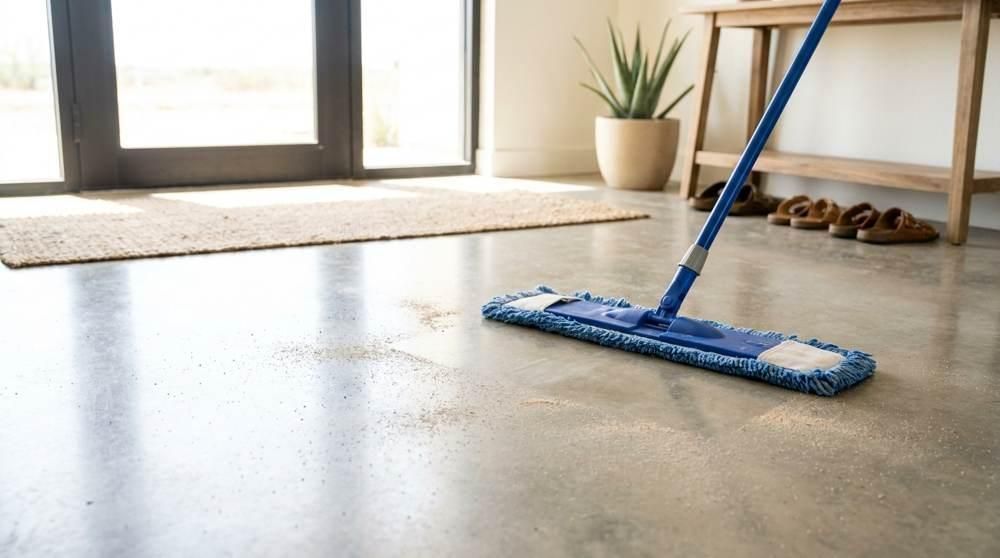
A smooth, clear epoxy topcoat with no texture additive has about the same traction as a polished tile floor when wet. Add dust, oil drips, or tire dressing residue and the surface gets slicker. In Lubbock, where haboobs and dust storms coat surfaces regularly, a garage floor that was fine yesterday can become a traction problem after a wind event followed by rain.
Anti-Slip Solutions That Work
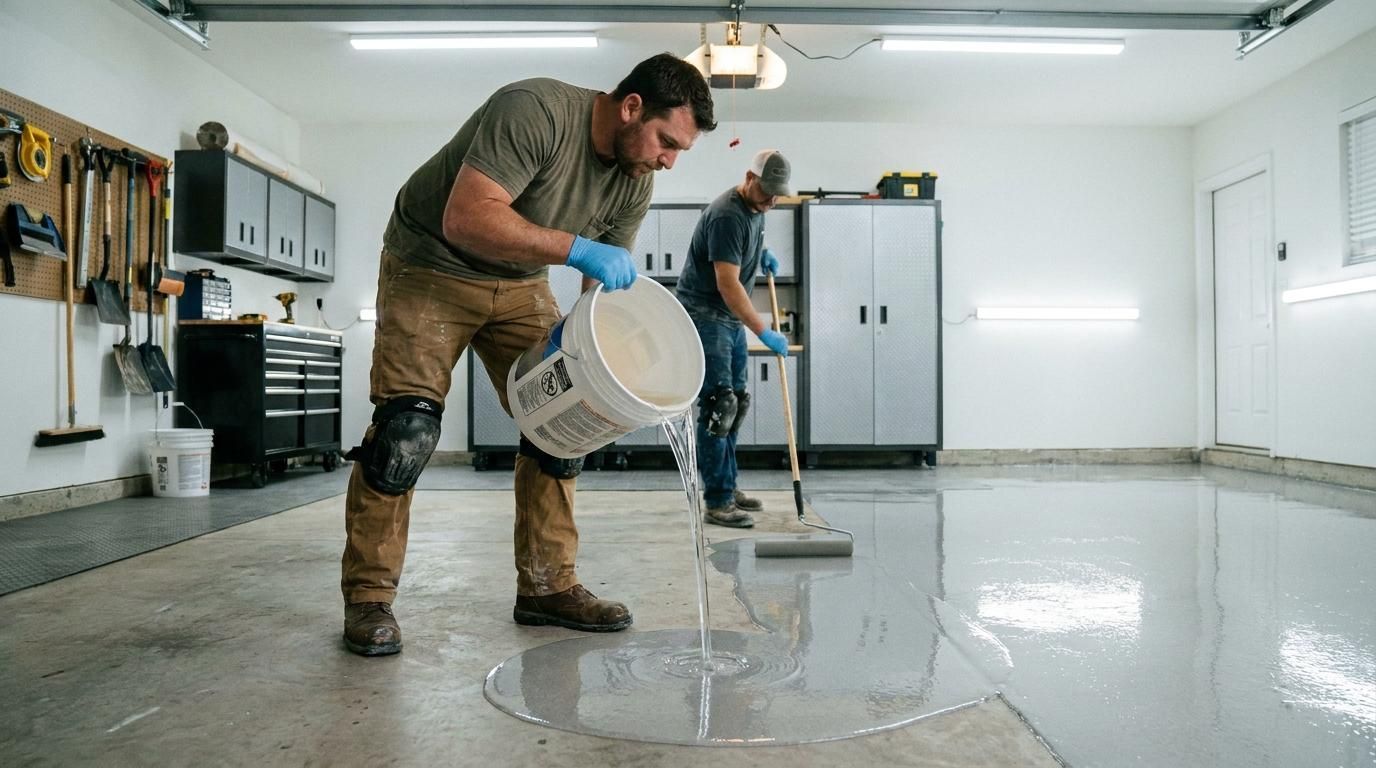
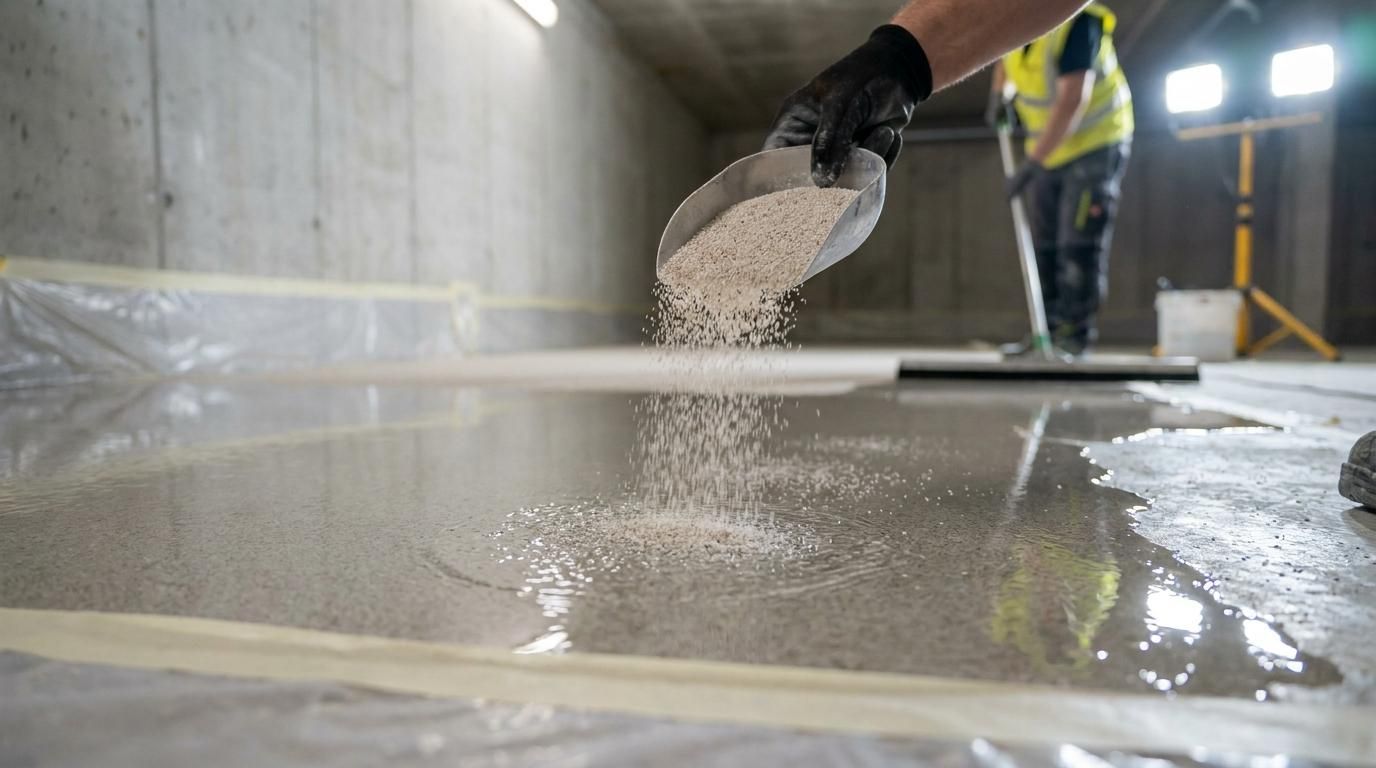
Professional coating installers solve the traction problem at the topcoat stage by adding anti-slip aggregates into or onto the final clear coat. The three most common options each offer a different level of texture and durability.
Aluminum Oxide Grit
Aluminum oxide is among the most durable anti-slip additives available. It provides strong traction even when the floor is wet and handles heavy foot traffic without wearing down. It adds a subtle grit texture to the surface that is noticeable underfoot but does not change the coating's visual appearance.
Silica Sand
Silica sand is the most commonly used additive because it balances cost and effectiveness. It mixes into the topcoat and creates a mild texture that improves wet traction without making the surface rough enough to be uncomfortable. It is also the easiest to clean around.
Decorative Flake Broadcast
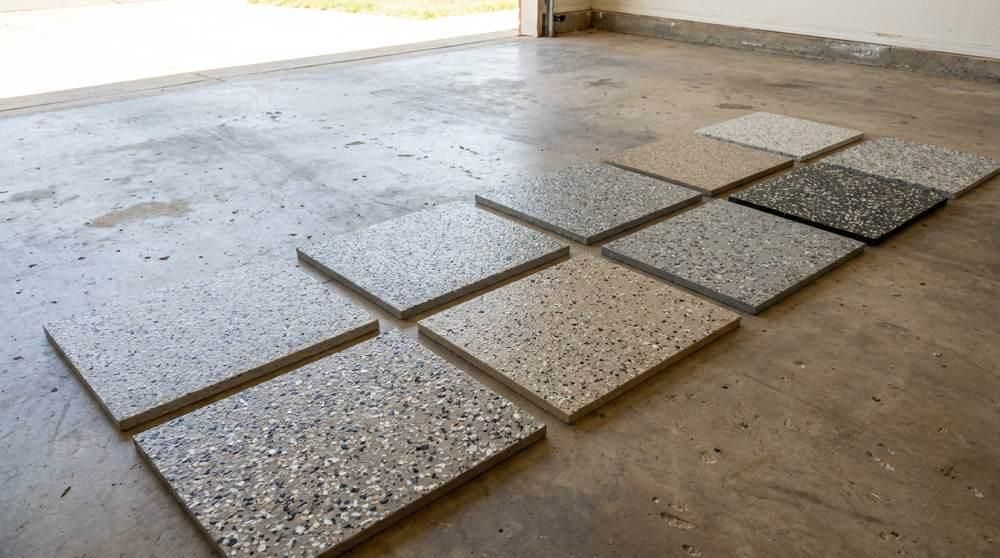
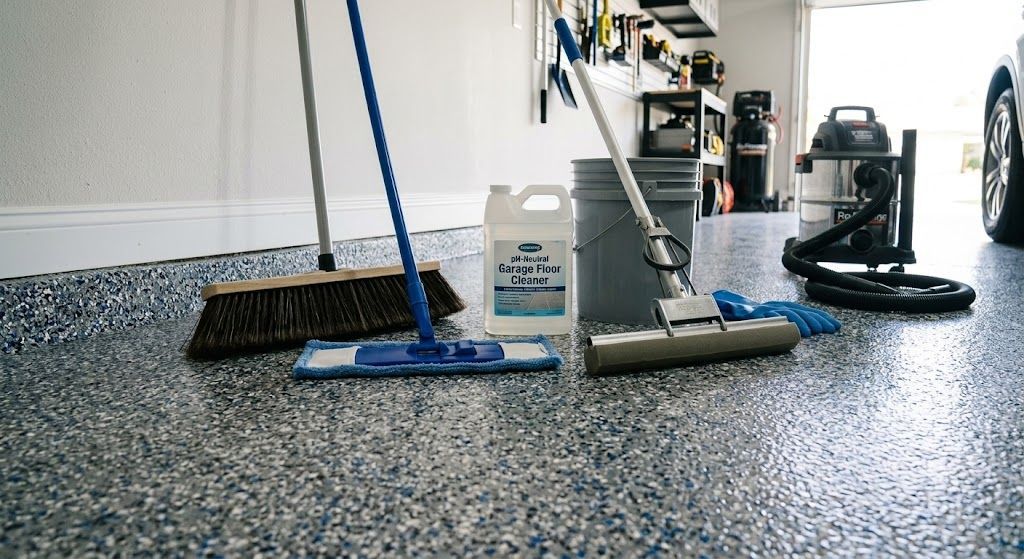
Vinyl flake chips broadcast into the coating create a textured, multi-color surface that improves traction while adding visual depth. The flakes create micro-ridges in the topcoat that help break up the water layer on the surface. Most of the garage floor coatings that Lubbock Concrete Coating installs use a full flake broadcast for this reason.
Coating Types and Slip Resistance Compared
Not all coating chemistries behave the same way when wet. Polyaspartic coatings, which Lubbock Concrete Coating uses as the primary system, cure with a slightly more flexible surface texture than rigid epoxy. That flexibility, combined with a full flake broadcast and anti-slip topcoat, creates better wet traction than a smooth epoxy system.
For areas around pools where slip resistance is critical, dedicated pool deck coatings use cool-surface technology with built-in texture designed specifically for wet barefoot traffic.
For a deeper comparison of how different coating types hold up over time in West Texas, see our coating lifespan guide.
Frequently Asked Questions
How do you make an epoxy garage floor less slippery?
Add an anti-slip aggregate like aluminum oxide or silica sand into the final topcoat during installation. Decorative flake chips also improve traction. For existing floors that are already coated, a thin anti-slip topcoat can be applied over the current surface without removing the original coating.
Are polyaspartic floors less slippery than epoxy?
Polyaspartic coatings with a full flake broadcast provide better wet traction than smooth epoxy because the flake texture creates micro-ridges that disrupt the water layer. Lubbock Concrete Coating uses polyaspartic systems with built-in texture for this reason, especially in garages that face rain exposure from open doors.
Is a smooth epoxy floor safe for a home gym?
A smooth epoxy floor without anti-slip treatment is not ideal for a home gym where sweat and spilled water are common. Adding aluminum oxide grit to the topcoat solves the problem. The texture is mild enough for comfortable barefoot use but strong enough to prevent slipping during exercise.
Keep Your Garage Floor Safe and Functional
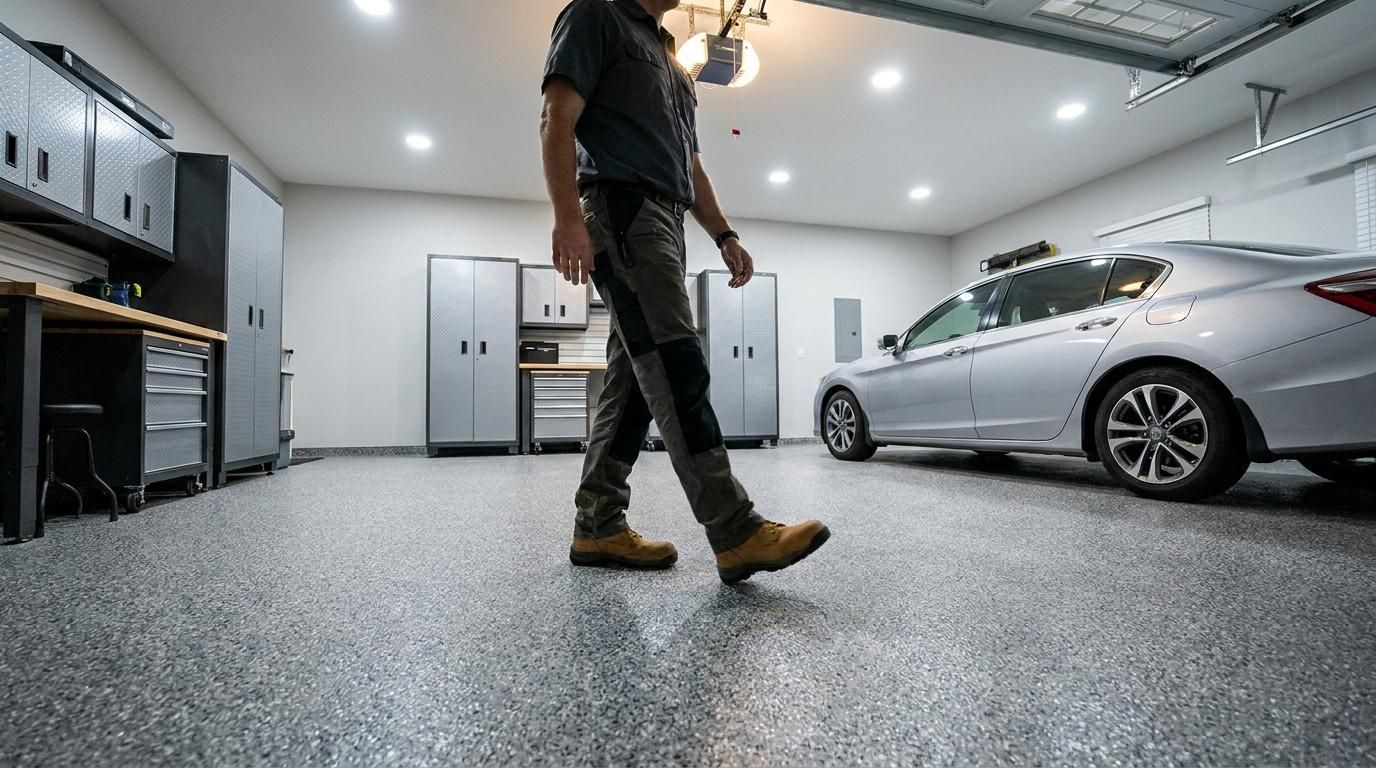
Epoxy floors are only slippery when they lack texture or anti-slip treatment. A properly installed coating system with flake broadcast, aluminum oxide, or silica sand in the topcoat handles wet conditions safely. The coating that goes down on day one determines whether the floor is safe for the next 15 to 20 years.
Contact Lubbock Concrete Coating at (806) 701-3436 or request a free estimate online to discuss anti-slip options for your garage floor.